NEW
NEW RESEARCH
AI Spend Report: See how 172 leaders are budgeting for AI Get the report
WEBINAR
AI Spend in 2026: What finance should do next Save your spot


SaaS spend management software helps companies understand and control what they actually spend on software and AI tools. It brings every subscription, contract, renewal date, and usage signal into one place, making it easier to spot unused licenses, overlapping tools, and unnecessary costs. Many platforms in this category also include pricing benchmarks and negotiation support, giving teams the leverage to pay less on the SaaS vendors critical to their operations.
This category has become essential for finance, IT, and procurement teams, especially in growing companies where software purchasing is decentralized and no one fully owns the stack.
We evaluated the following platforms based on feature depth, pricing transparency, G2 ratings, and how well they serve different team sizes and use cases. As a SaaS spend management platform ourselves, we've included SpendHound alongside competitors to give readers a transparent, side-by-side view.
Software budgets are no longer just about SaaS subscriptions. AI tools have become one of the fastest-growing line items in enterprise software spend, and most companies don't have clear visibility into where those dollars are going or how fast they're growing.
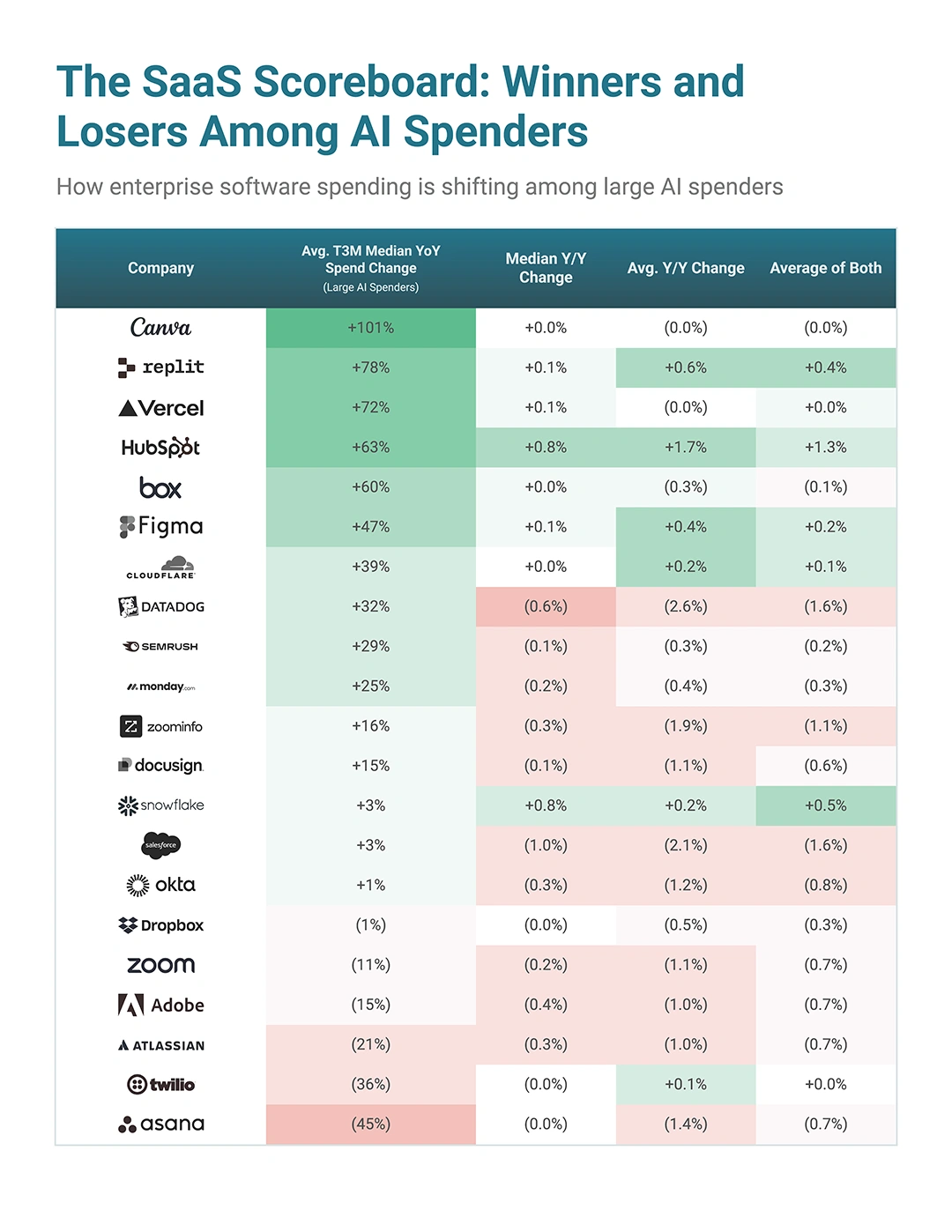
According to YipitData's March 2026 SaaS Scoreboard, the shift is already dramatic. Among large AI spenders, vendors like Canva (+101% YoY spend change), Replit (+78%), Vercel (+72%), and HubSpot (+63%) are seeing massive increases in spend — driven largely by AI-powered features and platform expansions. At the same time, established tools like Asana (-45%), Twilio (-36%), Atlassian (-21%), and Adobe (-15%) are seeing meaningful declines as teams reallocate budget toward newer capabilities.
This isn't a slow migration. It's a rapid rebalancing of software portfolios happening inside companies right now, often without finance or procurement teams fully aware of the scale.
That's what makes SaaS spend management software essential in 2026. The problem has expanded beyond unused licenses and duplicate tools. Teams now need visibility into AI spend alongside traditional SaaS, the ability to benchmark pricing across both categories, and the leverage to negotiate effectively as vendor pricing models shift from seat-based to usage-based and consumption-based contracts.
The platforms in this guide vary in how well they address this new reality. Some are purpose-built for traditional SaaS discovery and license optimization. Others, like SpendHound, track both SaaS and AI spend in a single platform, giving finance and procurement teams a complete view of where software dollars are actually going — and whether they're getting a fair price.

SpendHound combines visibility, pricing benchmarks, vendor intelligence, renewal tracking, and negotiation support in a single system, making it a G2 Leader for SaaS Spend Management. It gives finance and procurement teams a unified view of both SaaS and AI spend, helping them track where budgets are shifting, compare pricing across vendors, and control costs.
Whereas most SaaS spend management platforms require high annual fees and expensive service engagements, SpendHound takes a different approach. It provides pricing benchmarks, renewal control, and negotiation leverage all in one platform at no cost for companies with fewer than 1,000 employees, and only $10,000 per year for enterprise organizations, with a $150,000 savings guarantee.
Free up to 1,000 employees; Enterprise is $10,000/year with $150,000 savings guarantee. No license fees and no usage limits.
Vertice is a procurement and vendor management platform designed to help organizations centralize SaaS purchasing and outsource vendor negotiations. It combines procurement workflows with managed services, allowing teams to offload negotiation execution while maintaining visibility into contracts, vendors, and spend.
Where Vertice stands out is its managed procurement model. Rather than equipping internal teams with data and tools alone, Vertice’s team participates directly in vendor negotiations, helping secure savings and manage vendor relationships on the company’s behalf. The platform also includes vendor management, security reviews, and compliance workflows, making it a strong fit for procurement-led organizations that want a more hands-on approach to managing SaaS and cloud spend.
Custom pricing (not publicly disclosed); you can request pricing for Intake-to-Procure, SaaS Purchasing, and/or Cloud Cost Optimization
For a deeper look, see our full SpendHound vs Vertice comparison.
Zylo is an enterprise SaaS management platform designed for large organizations that need deep visibility into complex software environments. It focuses heavily on SaaS discovery, license tracking, and governance across distributed teams, making it a good fit for IT and software asset management teams managing hundreds or thousands of applications.
Where Zylo stands out is its ability to aggregate data from multiple sources to uncover shadow IT and track license utilization at scale. This makes it particularly useful for enterprises trying to eliminate unused software and maintain compliance across departments. However, its enterprise focus means it typically requires a larger investment and longer implementation compared to lighter-weight platforms.
Pricing not publicly disclosed; typically requires annual contract
For a deeper look, see our full SpendHound vs. Zylo comparison.
CloudEagle.ai is an AI-driven SaaS management platform focused on application discovery, identity governance, and security across SaaS and AI tools. It gives organizations a centralized view of all applications, users, and permissions, helping teams identify shadow AI, reduce unused licenses, and maintain control over access as environments grow and change.
Where CloudEagle stands out is its ability to connect identity, usage, and spend into a single control layer. It continuously monitors activity across apps, flags risk and inefficiencies, and automates actions like access changes and license cleanup. While it also supports renewals and cost optimization, its core strength is helping IT and security teams enforce governance and reduce risk across a rapidly expanding software stack.
Custom pricing by module (not publicly disclosed): SaaS Security & Compliance, Identity Governance, SaaS Management, SaaS Procurement, AI Governance. Free 15-day trial.
Torii is a SaaS management platform focused on helping IT, finance, and security teams gain full visibility into their software environment and continuously optimize it over time. It discovers all applications in use, including shadow apps, and connects each one to usage, ownership, and spend data so teams can make informed decisions about what to keep, right-size, or remove.
Where Torii stands out is its browser-first discovery and continuous optimization approach as opposed to relying on periodic audits. It captures applications that don’t appear in SSO or finance systems, then uses real usage and spend signals to automatically adjust licenses, enforce policies, and prevent waste from returning.
No public pricing available. You can get a custom quote for IGA (Identity Governance & Administration) and/or SMP (App Discovery, Savings, & Renewals).
Zluri is an identity governance and SaaS management platform designed to help IT and security teams gain full visibility into applications, users, and access across their organization. It combines SaaS discovery, access management, and cost optimization in a single system, giving teams control over both who has access and how software is being used.
Where Zluri stands out is its ability to connect identity governance with SaaS visibility and spend optimization. Its discovery engine identifies both sanctioned and shadow applications, then ties each one to user activity, roles, and license usage. This allows teams to automate access reviews, enforce policies, and continuously reclaim unused licenses, helping reduce both security risk and unnecessary spend.
Custom pricing (not publicly disclosed)
Tropic is a procurement management platform designed to help organizations formalize and standardize how they purchase software. It focuses on building structured procurement processes, including intake requests, approval workflows, vendor onboarding, and centralized purchasing. This makes it a strong fit for companies that want tighter control over how software decisions are made across teams.
Where Tropic stands out is its combination of procurement workflows with vendor intelligence and pricing insights. Its platform brings together purchasing governance and cost management, helping teams evaluate vendors, manage contracts, and support negotiations within a single system. However, its approach is more process-driven, requiring organizations to adopt structured procurement workflows to get full value.
Starts around $3,167/month, with pricing based on company size and employee count.
For a deeper look, see our full SpendHound vs Tropic comparison.
Productiv is a SaaS intelligence platform designed to help organizations understand how software is actually used across their business. It focuses on application usage analytics, giving IT and RevOps teams detailed visibility into adoption, engagement, and license utilization across large SaaS portfolios.
Where Productiv stands out is the depth of its usage data. It goes beyond basic login tracking to show how features are used, which teams are adopting specific tools, and where licenses are underutilized. This allows organizations to optimize their SaaS stack based on real usage patterns, reducing waste and improving software adoption. However, its approach is centered on usage analytics rather than pricing benchmarks or negotiation support.
Enterprise, custom pricing (not publicly disclosed); typically requires annual contract.
For a deeper look, see our full SpendHound vs. Productiv comparison.
Vendr is a SaaS procurement platform that combines vendor intelligence with managed negotiation services. It’s designed for finance and procurement teams that want hands-on support managing software purchases and renewals, with external experts directly involved in vendor conversations.
Where Vendr stands out is its services-led model. Instead of relying solely on internal teams or self-serve tools, Vendr’s procurement specialists participate in negotiations, manage vendor relationships, and help coordinate purchasing workflows. This approach can reduce internal workload and streamline negotiations, especially for organizations with limited procurement resources. However, access to these services is tied to a paid platform and engagement model.
Platform access starts around $12,000 per year. Total cost varies based on software spend and negotiation credits, with annual costs typically ranging from five figures to well over $100,000 depending on scope.
For a deeper look, see our full SpendHound vs. Vendr comparison.
Cledara is a SaaS management platform designed for finance teams to gain visibility and control over software spend and payments. It combines spend tracking with built-in payment tools, giving organizations a centralized way to manage purchases, renewals, and vendor payments in one place.
Where Cledara stands out is its focus on financial control and operational efficiency. The platform integrates payment management directly into SaaS workflows, allowing teams to issue virtual cards, set spend limits, and manage invoices alongside subscription tracking. This makes it especially useful for organizations looking to reduce administrative overhead and tighten control over how software is purchased and paid for, rather than focusing on deep analytics or procurement strategy.
Basic plans start at $75/month for managing just 20 software applications and real-time SaaS visibility; Premium is $200/month; Pro plans start at $500/month for a customized offering. Additional capabilities are available through optional paid modules, including spend optimization with software pricing benchmarks.
Spendflo is an AI-driven procurement platform that combines software with managed sourcing and negotiation services. It’s designed to help finance, IT, and procurement teams manage SaaS purchasing and renewals through a combination of structured workflows and hands-on support.
Where Spendflo stands out is its procurement-as-a-service model paired with workflow automation. The platform helps standardize how software is requested, approved, and managed, while its procurement team supports vendor sourcing, negotiations, and contract management. This makes it a strong fit for organizations that want both process structure and external support. However, its value is tied to a paid engagement and a more formal procurement operating model.
Paid platform with annual contracts, typically starting around $18,000 and scaling to $84,000+ per year depending on scope.
For a deeper look, see our full SpendHound vs. Spendflo comparison.
Spendbase is a SaaS spend management platform designed to help companies reduce software and cloud costs through discounts, vendor negotiations, and payment-based savings. It combines spend visibility with a marketplace of SaaS and cloud discounts, along with tools to manage subscriptions, procurement, and payments in one place.
Where Spendbase stands out is its focus on direct cost savings. In addition to tracking spend and usage, the platform provides access to discounted SaaS pricing, cloud credits, and cashback through virtual cards. It also offers managed negotiation support and procurement workflows, making it a strong fit for companies looking to reduce costs quickly without relying solely on internal analysis or negotiation strategies. However, its pricing model is tied to realized savings, and its value depends on ongoing engagement with its platform and services.
The Digital Banking for Startups plan is free with a focus on no-fee banking, virtual cards, procurement, and cashback. The Save Management Platform is a performance-based pricing model with a deposit required to access the platform and a 2x ROI money-back guarantee on your initial deposit investment.
Headquartered in Europe, Sastrify is a SaaS procurement and spend management platform designed to help companies optimize software purchasing and renewals through pricing benchmarks and negotiation support. It brings together visibility, procurement workflows, and vendor intelligence to help IT, finance, and procurement teams manage their SaaS stack more effectively.
Where Sastrify stands out is its combination of benchmark data and hands-on support. The platform provides access to pricing insights and negotiation expertise, helping teams secure better contract terms while maintaining control over vendor relationships. It also centralizes subscription data, renewal timelines, and vendor documentation, making it easier to manage SaaS purchasing in one place. However, according to customer reviews, some workflows still require manual effort, and automation is less advanced compared to more process-driven platforms.
As a European-based company, prices are listed in euros. Software Management from €12.5K; Vendor Benchmarks from €15K; Expert Procurement from €25K
BetterCloud is a SaaS management platform built for IT teams to automate and control the full lifecycle of SaaS applications. It focuses on user lifecycle management, workflow automation, and policy enforcement, helping organizations streamline onboarding/offboarding and ongoing access management across their software stack.
Where BetterCloud stands out is its depth of automation. The platform uses a no-code workflow builder to automate repetitive IT tasks, enforce security policies, and manage user access across applications. While it also provides visibility into applications, licenses, and usage, its impact on spend is primarily indirect. By ensuring users have the right access at the right time and reclaiming unused licenses, it helps reduce waste and improve efficiency — but it is not designed for procurement, pricing strategy, or vendor negotiation.
Pricing not publicly available. Individual pricing for Spend Optimization available upon request. Free trial with limited capabilities.
The best SaaS spend management software for your company depends on how your organization approaches software purchasing, optimization, and control. Across this category, SaaS spend optimization falls into distinct models. Choosing the wrong one could lead to unnecessary cost, complexity, or limited ROI.
When evaluating your options for the best SaaS spend optimization software for your company, focus on the following:
SpendHound stands out by combining the core capabilities companies need—visibility, pricing benchmarks, renewal tracking, and negotiation support—without the cost and complexity typical of this category. It’s built for finance and procurement teams that want to reduce SaaS spend quickly without overhauling their processes or outsourcing control. With a free model for most companies and a flat-fee enterprise plan backed by a savings guarantee, it delivers a straightforward path to measurable ROI.
SaaS spend management software helps companies track, control, and optimize spending on software. It provides visibility into all subscriptions, usage, contracts, and renewals, helping teams identify waste, eliminate duplicate tools, and stay ahead of upcoming costs. Many platforms also support procurement workflows and provide pricing benchmarks or negotiation guidance, so teams can make better purchasing decisions and avoid overpaying on software.
Between 30%-40% of SaaS licenses in a typical enterprise remain unused. This is often a direct result of poor visibility. SaaS spend management tools help companies uncover shadow IT, reclaim unused licenses, proactively manage renewals, reduce software costs through better negotiation, and maintain compliance by controlling access and vendor usage.
The right mix of features will depend on your most significant pain points and whether your priority is cost reduction, visibility, or governance. Some tools focus on identifying all software in use by pulling data from finance systems and SSO, while others go deeper on usage data, renewal tracking, or procurement workflows. If reducing costs is the goal, pricing benchmarks and negotiation support matter most, while integrations and security controls become more important in larger or regulated environments.
Pricing for SaaS spend management software ranges from free to over $100,000 per year depending on the platform and operating model. Many platforms offer custom enterprise pricing and require a demo or some other engagement to access pricing information. SpendHound pricing is transparent: it’s free for companies with up to 1,000 employees, while its enterprise plan is $10,000 per year with a $150,000 savings guarantee. In many cases, teams that use SpendHound see ROI within 3–6 months through reduced spend and improved renewals.
There are some free SaaS spend management tools, but options are limited. SpendHound is free for companies with up to 1,000 employees and includes full spend visibility, pricing benchmarks, and negotiation support. Spendbase offers a free-to-start model with paid tiers based on savings. Most other platforms require custom enterprise pricing, though some offer free trials or limited pilots before requiring companies to commit.
The best SaaS spend management tools align with how your team purchases and manages software. Top SaaS spend management platforms like SpendHound, Vertice, Zylo, and Tropic all support SaaS spend management in different ways. As AI tools become a growing part of software budgets, it’s important to choose a platform that tracks AI spend alongside SaaS subscriptions and is able to surface shadow AI purchases. SpendHound enables teams to manage all software and AI costs in one place.