NEW
NEW RESEARCH
AI Spend Report: See how 172 leaders are budgeting for AI Get the report
WEBINAR
AI Spend in 2026: What finance should do next Watch now


The top Zylo alternatives in 2026 are SpendHound, Josys, Torii, Cledara, BetterCloud, CloudNuro, CloudEagle, Zluri, Vertice, and Vendr. These platforms address different parts of SaaS and AI management, from software governance and license optimization to procurement workflows, pricing intelligence, and vendor negotiations. The best alternative depends on which of these capabilities your organization prioritizes.
Zylo is one of the most established SaaS management platforms on the market, especially among large enterprises with dedicated IT, procurement, and FinOps teams. The platform provides SaaS and AI spend visibility, application discovery, license optimization, renewal management, pricing benchmarks, and enterprise governance capabilities. But not every organization needs the same depth of SaaS management. Some teams prioritize faster implementation or lighter-weight administration, while others put greater emphasis on pricing intelligence, procurement support, vendor negotiations, or renewal decisions.
This article compares 10 Zylo alternatives across SaaS management, procurement, and vendor management. We cover each platform's strengths, limitations, pricing, and best-fit use cases to help you determine which approach best matches your priorities.
One note before we start: SpendHound is included in this list, and we’ve tried to evaluate every vendor, including ourselves, as fairly and transparently as possible.
Zylo is a strong enterprise SaaS management platform, but it’s not the right fit for every company. Teams evaluating alternatives may be looking for faster deployment, lower operational overhead, a different approach to SaaS and AI management, or greater emphasis on pricing intelligence and procurement.
Three patterns show up consistently:
Long implementation timelines
Zylo implementations can take months, according to customer reviews. For teams trying to get visibility into renewals or software spend quickly, that timeline can feel too heavy. Some alternatives on this list can connect to ERP, AP, or SSO systems and surface spend and usage data with less implementation overhead.
Different SaaS management priorities
Zylo is designed for organizations managing large software portfolios across IT, procurement, finance, and FinOps. Its capabilities span application discovery, license optimization, governance, renewals, and SaaS and AI spend management. Some organizations don't need that same breadth. Depending on their priorities, they may want a platform focused more heavily on pricing intelligence, procurement workflows, identity governance, payment controls, or cloud and AI cost management.
Greater emphasis on pricing intelligence and procurement
Zylo includes pricing benchmarks, procurement, and renewal management alongside its broader SaaS management capabilities. Other platforms put these capabilities closer to the center of the value they provide. Procurement and finance teams evaluating alternatives should consider the depth and accessibility of pricing benchmarks, how negotiation support is delivered, and whether the platform is designed to complement or replace their existing procurement processes.
Before choosing a solution, identify which capabilities matter most to your team. Zylo alternatives increasingly span SaaS and AI management, identity governance, procurement, spend optimization, and pricing intelligence, but they emphasize these areas differently.
Consider what you actually need to manage. Some platforms focus on SaaS discovery, license utilization, and governance, while others extend into AI application discovery, usage, and consumption costs. If AI spend is becoming a meaningful part of your software budget, evaluate how deeply each platform tracks it.
Many platforms can show what you spend internally. Fewer provide market context around whether your pricing is competitive. If procurement savings matter, look at the depth and granularity of pricing benchmarks, including whether data is available at the vendor, product, tier, or SKU level and how easily your team can access it.
Look beyond basic renewal reminders. Consider contract storage, ownership, approval workflows, intake, renewal lead times, and how the platform fits into your existing procurement process. The right level of workflow automation will depend on how mature your procurement function already is.
Platforms take different approaches to negotiations. Some provide data and leave execution to your team, while others offer AI negotiation tools, human procurement experts, or managed negotiation services. Consider how much support your team needs and whether it complements your existing procurement resources.
Implementation timelines and ongoing administration vary considerably. Consider the integrations required, which teams need to participate in deployment, how much configuration is necessary, and whether the platform requires significant ongoing IT or procurement administration.
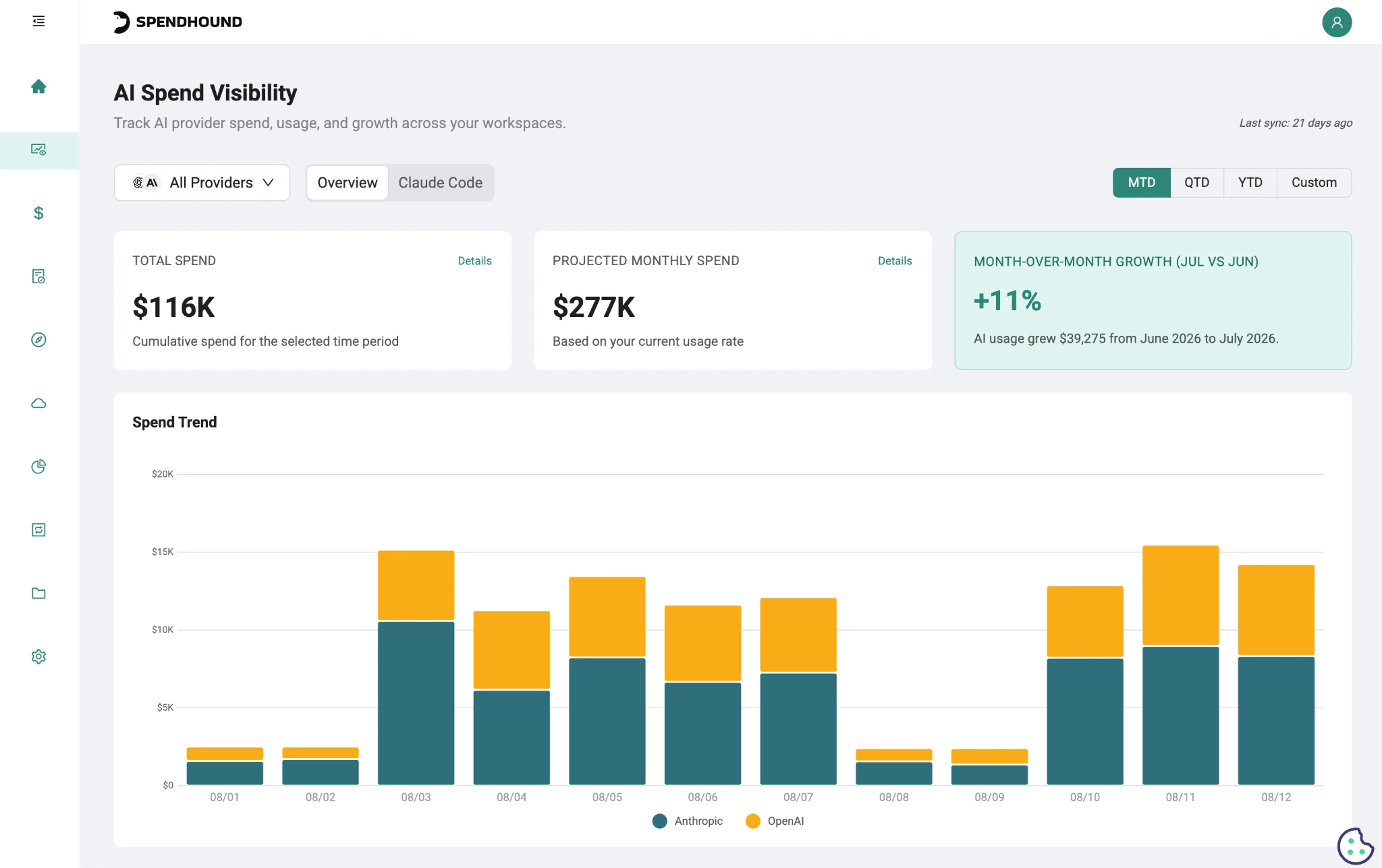
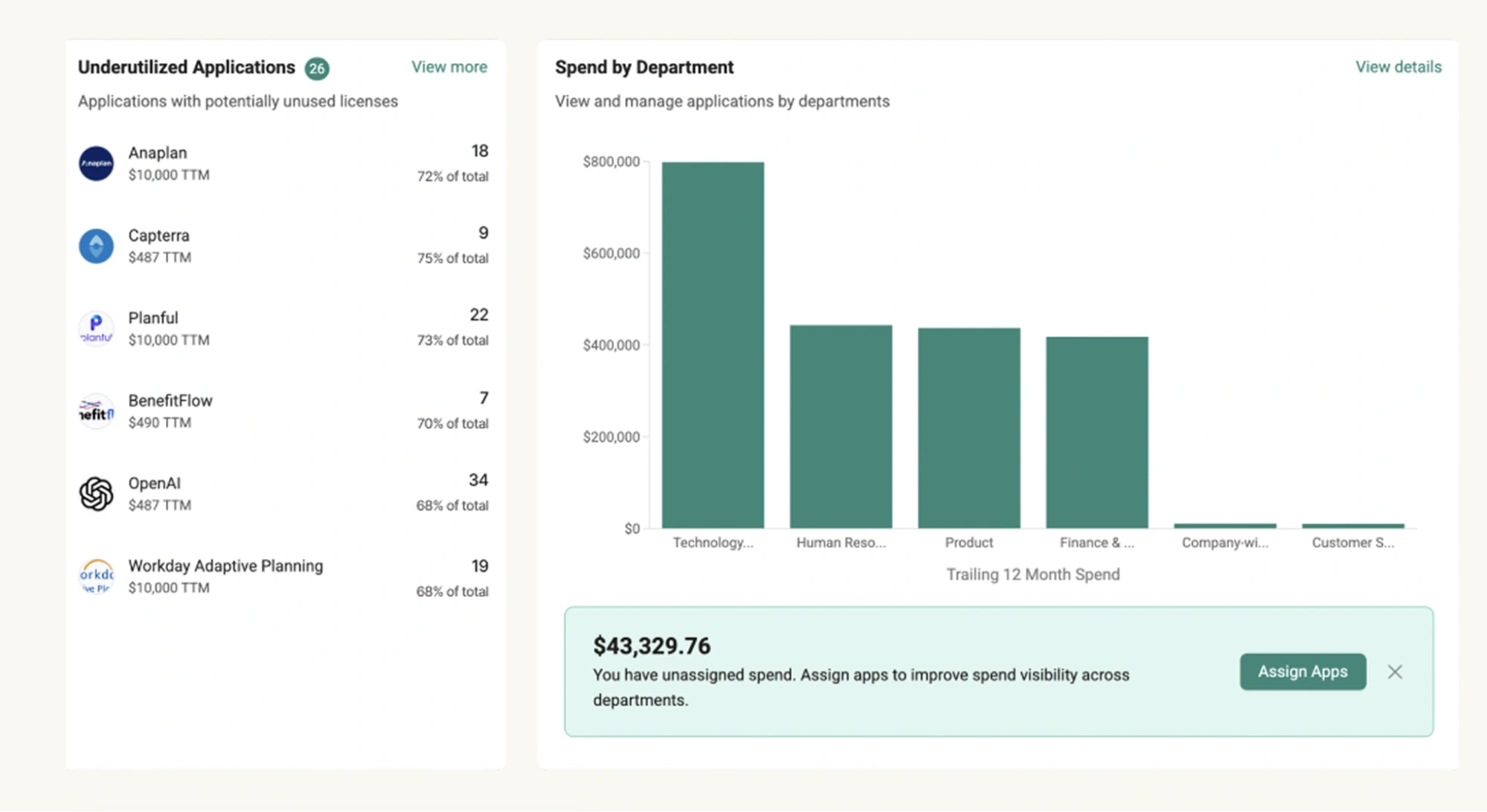
SpendHound is an AI and SaaS spend management platform that helps Finance, Procurement, and IT teams manage software spend while making more informed purchasing and renewal decisions. The platform combines AI and SaaS spend visibility, renewal management, license usage insights, Vendor Intelligence, and procurement support.
A key differentiator is Vendor Intelligence. SpendHound gives teams access to market pricing benchmarks and vendor insights alongside their own spend, contract, renewal, and usage data. Procurement teams can use that intelligence to evaluate pricing and negotiate with more context, while organizations without dedicated procurement resources can also get support from SpendHound's procurement experts.
Not the right fit if: You primarily need identity governance, automated IT deprovisioning, access reviews, or compliance-heavy IT administration at scale. SpendHound is designed around AI and SaaS spend management, Vendor Intelligence, renewals, and procurement rather than serving as a full identity governance or IT administration platform.
Compared with Zylo: SpendHound puts greater emphasis on AI and SaaS spend management, Vendor Intelligence, and the commercial decisions around software purchases and renewals. Zylo is better suited to organizations prioritizing deep SaaS portfolio management, governance, and license optimization. See our full Zylo vs. SpendHound comparison for a feature-by-feature breakdown.
Benepass used SpendHound benchmark reports to negotiate better software pricing without hiring a dedicated procurement team. Instead of relying on Slack groups for pricing intel, the company received benchmark ranges and negotiation recommendations within a day. One negotiation alone saved $7,000, and the team estimates overall software savings of up to 30%.
Fusion92 connected SpendHound to NetSuite and its AP systems to consolidate software visibility after multiple mergers. The company reviewed more than 200 tools, completed 12 consolidations, and identified $345,000 in projected savings for 2025, with an additional $900,000 projected for 2026. According to VP of Operations Michelle Gawley, benchmark data significantly improved the team’s leverage during vendor negotiations.
Kit evaluated larger SaaS management and procurement platforms before choosing SpendHound. Within weeks, the company achieved centralized vendor visibility and negotiated better terms with HubSpot at a lower overall cost. Head of Finance Anthony Wakim described SpendHound as “leverage,” not just software.
Torii is a SaaS, identity, and AI management platform focused on helping IT teams discover and manage applications, optimize licenses, automate employee lifecycle workflows, and govern AI usage. The platform combines SaaS discovery, workflow automation, identity governance, renewal management, and AI management in a centralized system.
Torii places a strong emphasis on automation and operational control. Its workflows can automate tasks such as onboarding, offboarding, and license reclamation, while its AI management capabilities give organizations visibility into AI applications, usage, token consumption, and spend. This makes Torii particularly relevant for IT teams looking to govern both traditional SaaS and emerging AI tools.
Not the right fit if: Your primary need is pricing intelligence, procurement support, or vendor negotiation. Torii is designed more heavily around SaaS and AI management, identity governance, and IT automation than the commercial decisions surrounding software purchases and renewals.
Zluri is an identity governance and security platform designed to help organizations manage access across human and non-human identities, including employees, service accounts, and AI agents. Its capabilities span Identity Governance and Administration (IGA), identity security, SaaS management, application discovery, access reviews, and employee lifecycle automation.
Zluri has expanded beyond its roots in SaaS management to put greater emphasis on identity governance and security. Its SaaS management capabilities still provide application discovery, license and usage visibility, and shadow IT insights, while its identity products focus on controlling access, automating access reviews, and managing identity risks across increasingly complex environments.
Not the right fit if: Your primary need is AI and SaaS spend management, pricing benchmarks, or vendor negotiation support. Zluri is designed more heavily around identity governance, access management, and identity security than the commercial management of software spend and renewals.
CloudEagle is a SaaS, identity, and AI governance platform that helps organizations manage software applications, access, spend, renewals, and procurement from a centralized system. Its capabilities span SaaS management, SaaS procurement, identity governance, AI governance, and SaaS security.
CloudEagle is designed for organizations that want to connect software management with governance and procurement workflows. Teams can discover applications and AI tools, manage licenses and renewals, govern user access, automate procurement workflows, and centralize contract and spend data within the same platform.
Not the right fit if: You primarily need AI and SaaS spend management with market pricing intelligence rather than a broader governance platform. CloudEagle spans SaaS management, identity governance, AI governance, security, and procurement, making it better suited to organizations that want to manage multiple governance and procurement workflows within one platform.
BetterCloud is a SaaS management and operations platform that helps IT teams manage application usage, software spend, user lifecycles, and security across their SaaS environment. Its capabilities span SaaS discovery, spend optimization, user lifecycle automation, workflow automation, file governance, and security controls.
BetterCloud is particularly strong in SaaS operations and IT automation. Its no-code workflow engine helps teams automate onboarding, offboarding, application access, and other administrative tasks, while its spend optimization capabilities help identify unused licenses, manage renewals, and reduce unnecessary SaaS costs.
Not the right fit if: Your primary need is AI and SaaS spend management, procurement workflows, or vendor negotiation support. BetterCloud is designed more heavily around SaaS operations, spend optimization, IT automation, and security than the commercial management of software purchasing and renewals.
Vertice is a procurement and vendor management platform that helps organizations centralize purchasing, approvals, vendor management, renewals, and cost optimization across software and cloud spend. Its capabilities span intake-to-procure workflows, SaaS purchasing, vendor management, cloud cost optimization, pricing intelligence, and procurement services.
Vertice acquired Vendr in June 2026, expanding its pricing intelligence and negotiation capabilities with Vendr’s software pricing and procurement data. The combined offering is designed primarily for procurement and finance teams that want to standardize purchasing and manage procurement workflows, vendor relationships, and cost optimization within a broader procurement platform.
Not the right fit if: You primarily want AI and SaaS spend management that works alongside your existing procurement processes rather than a centralized procurement operating platform. Vertice is designed more heavily around running procurement workflows, purchasing, vendor management, and managed negotiations across the organization.
Want a closer comparison? See our full Vertice vs. SpendHound comparison for a feature-by-feature breakdown.
Josys is an AI-native identity governance and SaaS management platform that helps IT and security teams discover applications and manage access across their organization. Its capabilities span identity governance, SaaS discovery, application access, employee lifecycle management, shadow IT, and license utilization.
Josys has expanded its focus beyond traditional SaaS management toward identity security and governance across human, machine, and AI identities. Its Discovery product provides visibility into SaaS applications, users, and licenses, while its broader identity governance capabilities help teams automate access management, onboarding and offboarding, and governance workflows.
*Pricing per the Josys pricing page, accessed September 2, 2026.
Not the right fit if: Your primary need is AI and SaaS spend management, pricing intelligence, procurement workflows, or vendor negotiation support. Josys is designed more heavily around identity governance, SaaS discovery, access management, and IT lifecycle automation than the commercial management of software spend and renewals.
Cledara is a SaaS purchasing and subscription management platform that combines virtual cards, invoice capture, spend controls, and renewal tracking in one system. Unlike most SaaS management platforms, Cledara acts as the payment layer for software purchases: each subscription receives its own virtual card with configurable spend limits, allowing finance teams to control purchases before spend happens rather than monitoring it afterward.
The platform is designed primarily for finance teams that want tighter control over SaaS purchasing, invoice reconciliation, and employee software requests without implementing a large procurement or governance platform. Cledara is especially popular with startups and mid-market companies looking for lightweight spend controls and simpler software purchasing workflows.
*Pricing per the Cledara pricing page, accessed September 2, 2026.
Not the right fit if: Your primary need is AI and SaaS spend management, pricing intelligence, identity governance, or vendor negotiation support. Cledara is designed more heavily around controlling how software is purchased and paid for than managing the broader commercial and operational lifecycle of software vendors.
CloudNuro is a SaaS, cloud, and AI cost management platform designed to help organizations manage software and technology spend across SaaS, PaaS, IaaS, and AI environments. Its capabilities span SaaS management, cloud cost optimization, license management, FinOps, and AI adoption management.
CloudNuro stands out for combining traditional SaaS and cloud cost management with visibility into enterprise AI adoption. Its AI management capabilities help organizations discover AI tools, monitor usage and token consumption, understand costs, and establish governance around AI adoption alongside their broader technology portfolio.
Not the right fit if: Your primary need is market pricing intelligence, procurement workflows, or vendor negotiation support. CloudNuro is designed more heavily around managing and optimizing SaaS, cloud, and AI costs than the commercial decisions surrounding software purchases and renewals.
Vendr is a software pricing intelligence and negotiation platform that helps procurement and finance teams benchmark software pricing and negotiate vendor agreements. Its capabilities combine SaaS pricing data, negotiation insights, contract intelligence, and AI negotiation agents designed to support software purchasing and renewals.
Vertice acquired Vendr in June 2026, bringing Vendr's pricing and negotiation data into Vertice's broader procurement platform. Vendr remains particularly relevant for teams evaluating software pricing and negotiation tools, while Vertice offers a broader set of procurement workflows spanning intake, purchasing, vendor management, and cost optimization.
Not the right fit if: Your primary need is broader AI and SaaS spend management, license usage visibility, identity governance, or IT operations. Vendr is designed more heavily around software pricing intelligence and negotiations, with broader procurement capabilities available through its parent company, Vertice.
Want a closer comparison? See our full Vendr vs. SpendHound comparison for a feature-by-feature breakdown.
The best Zylo alternative depends on which part of software management your organization is trying to improve. Some platforms focus on SaaS and AI governance, identity management, and IT automation. Others emphasize spend management, pricing intelligence, procurement workflows, negotiations, payments, or cloud cost management.
Start with the capabilities your team needs most and how the platform will fit into your existing Finance, Procurement, and IT processes.
Zylo and SpendHound overlap across SaaS management, spend visibility, renewals, license usage, and pricing intelligence, but they emphasize different parts of the software lifecycle.
SpendHound is the best Zylo alternative for organizations that prioritize AI and SaaS spend management, Vendor Intelligence, and the commercial decisions around software purchases and renewals. Zylo puts greater emphasis on SaaS portfolio management, governance, and license optimization.
Still evaluating? Compare Zylo vs. SpendHound side by side, or request a demo to see SpendHound in action.
Zylo is an enterprise SaaS management platform that helps organizations manage software and AI spend, application discovery, license utilization, renewals, and governance. IT, Procurement, Finance, and FinOps teams use Zylo to understand their software portfolio, optimize licenses and costs, manage renewals, and govern SaaS and AI usage across the organization.
The best Zylo alternative depends on your priorities. SpendHound is a strong alternative for organizations focused on AI and SaaS spend management, Vendor Intelligence, renewals, and vendor negotiations. Torii and CloudEagle are better suited to broader SaaS and AI governance, while Zluri, BetterCloud, and Josys are stronger options for identity governance and IT operations.
Look for a Zylo alternative that matches your primary use case. Key considerations include SaaS and AI management, pricing intelligence, license optimization, identity governance, renewal and procurement workflows, negotiation support, and implementation requirements. The right platform depends on whether your priority is IT governance, software cost management, procurement, or another part of the software lifecycle.
Zylo does not publicly disclose platform pricing. Organizations need to contact Zylo for a custom quote based on their requirements. If transparent pricing is important to your evaluation, compare the pricing models of Zylo alternatives before choosing a platform.
The best Zylo alternative for mid-market companies depends on the use case. SpendHound is a strong fit for AI and SaaS spend management, pricing benchmarks, renewals, and procurement support. Torii and CloudEagle offer broader SaaS and AI management capabilities, while Zluri and Josys are better aligned with organizations prioritizing identity governance and access management.
Zylo focuses more heavily on SaaS portfolio management, governance, and license optimization. SpendHound focuses more heavily on AI and SaaS spend management, Vendor Intelligence, and the commercial decisions around software purchases and renewals. SpendHound can serve as a primary SaaS spend management platform or complement existing procurement processes with SKU-level pricing benchmarks and procurement expertise.